

India is a country where cricket is king. It is a huge sport, played everywhere, and it takes a lot of people and a lot of numbers to play it. Padel is a very different game: four players, one small court, and a sport anyone can pick up. In February 2024 I flew to India to help start it. Padel Park had booked my ticket and, more importantly, trusted me to develop padel with them in the country, beginning with the first groundwork. I landed in what felt like another world.
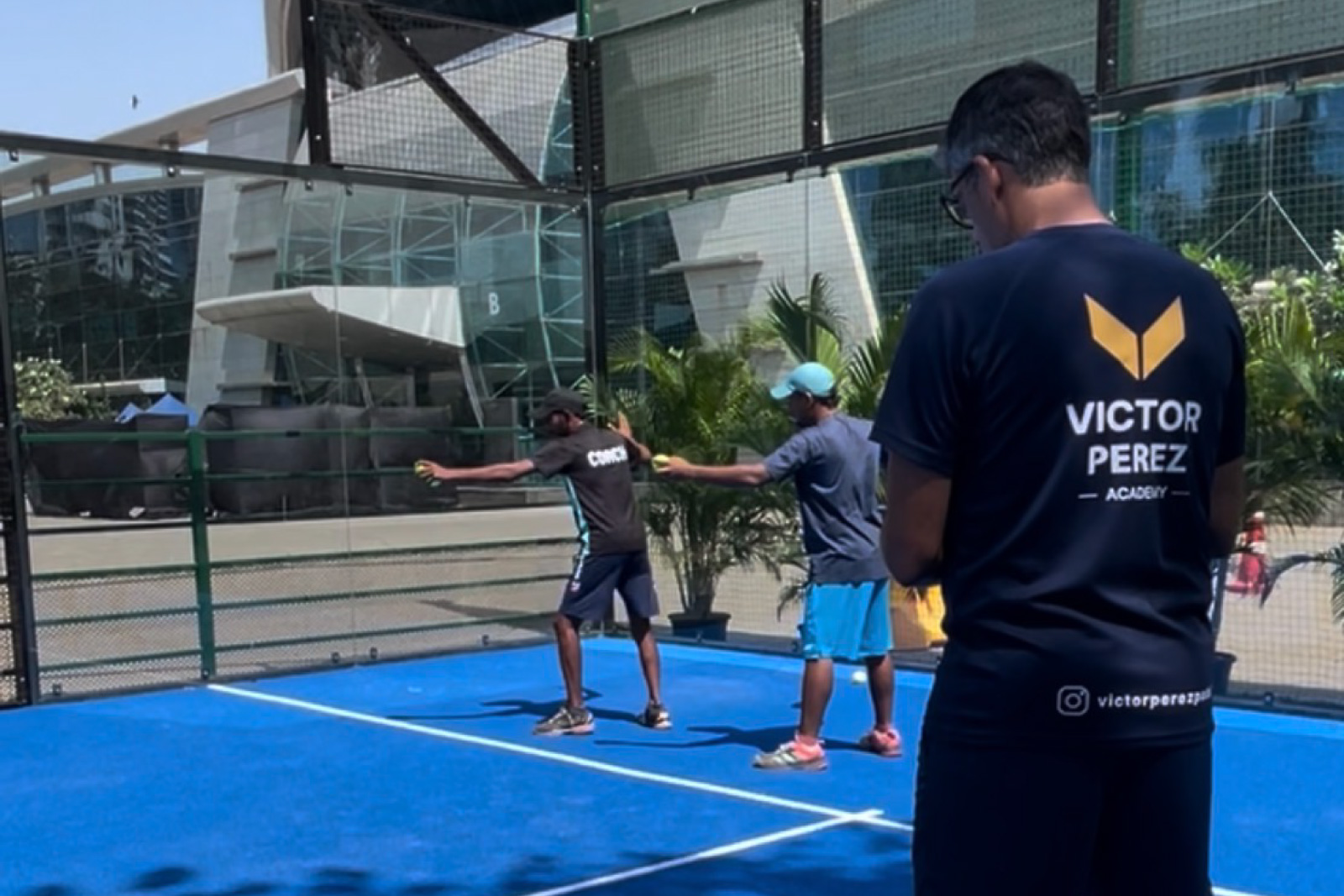
The heat was extreme and the culture was nothing like what I knew. What struck me first was how kind everyone was. What struck me next was the traffic, a kind of chaos that told me the challenge ahead was enormous. Then I met the coaches and I connected with them immediately. India is a racket-sport country and it showed: they had good hands and far more skill than I expected.
- →A country does not grow in padel because of courts. It grows when it has coaches who know how to teach, and a method they can repeat.
- →Training the coaches first is slower at the start and far faster in the end.
- →India is a real place with real players, and it rewards the people who show up and stay.
I have spent more than twenty years in this sport, as a player, a coach, a padel consultant and a FIP international referee. India is where I learned how much a country can change in a short time when the right people decide to build things properly.
The call from Padel Park
Padel Park India contacted me before my first trip in February 2024. They had ambition and a clear instinct that padel could work in their country. What they did not yet have was a way to teach it: no coaches trained to a common standard, no method, no path for a beginner to become a competitive player.
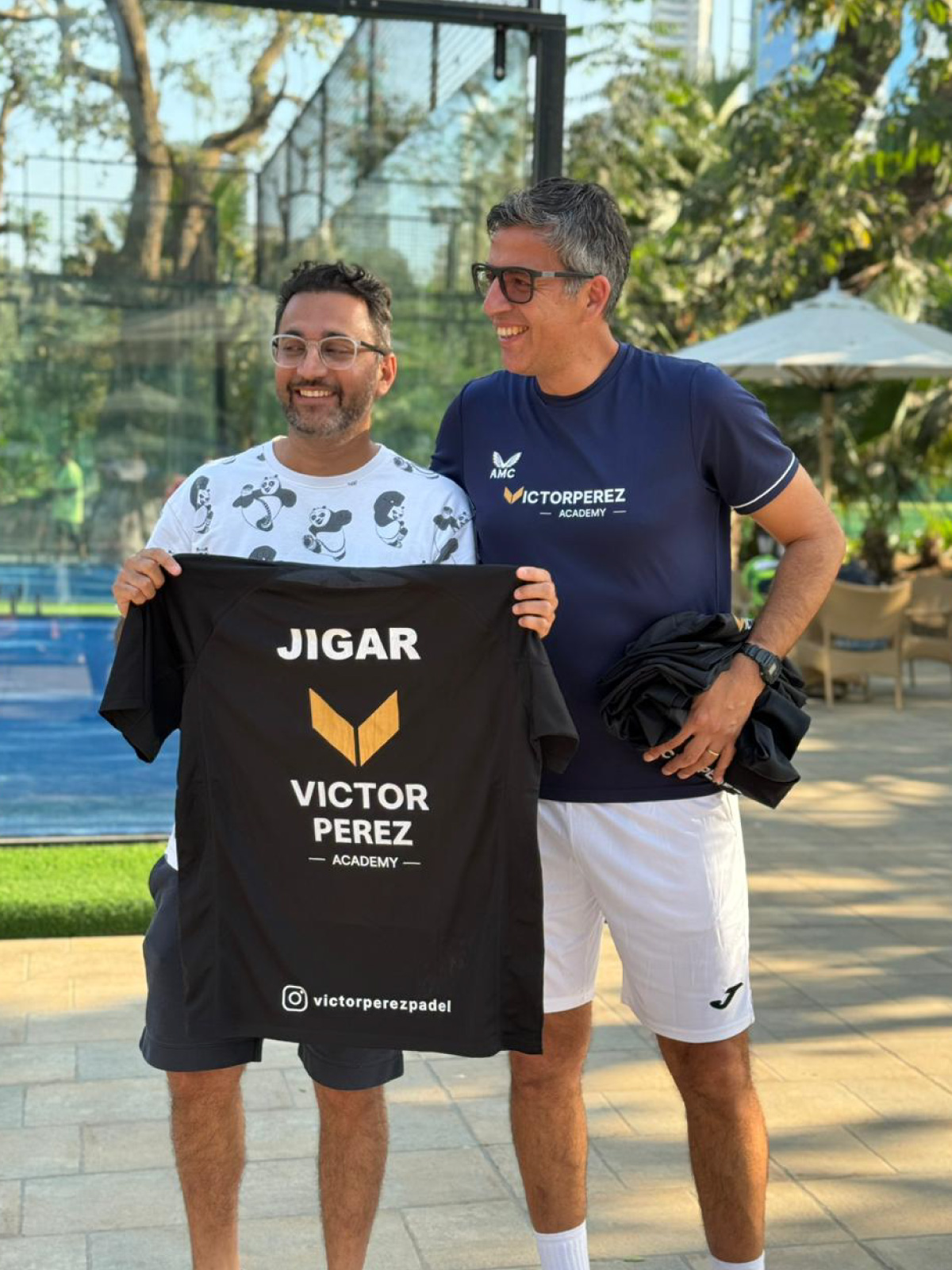
They first asked me to come as a coach. Over time I also worked with them as a consultant, and the job grew well beyond the court. I helped them build the infrastructure of padel in India: contacting the main padel brands, helping set up the structure of a federation through JSW, and getting through the paperwork that a new sport needs before it can grow.
I said yes to all of it. As a coach, I have always believed the first coaches in a new country decide everything that comes after. Get them right and you create a culture. Get them wrong and you spend ten years undoing habits.
The first coaches
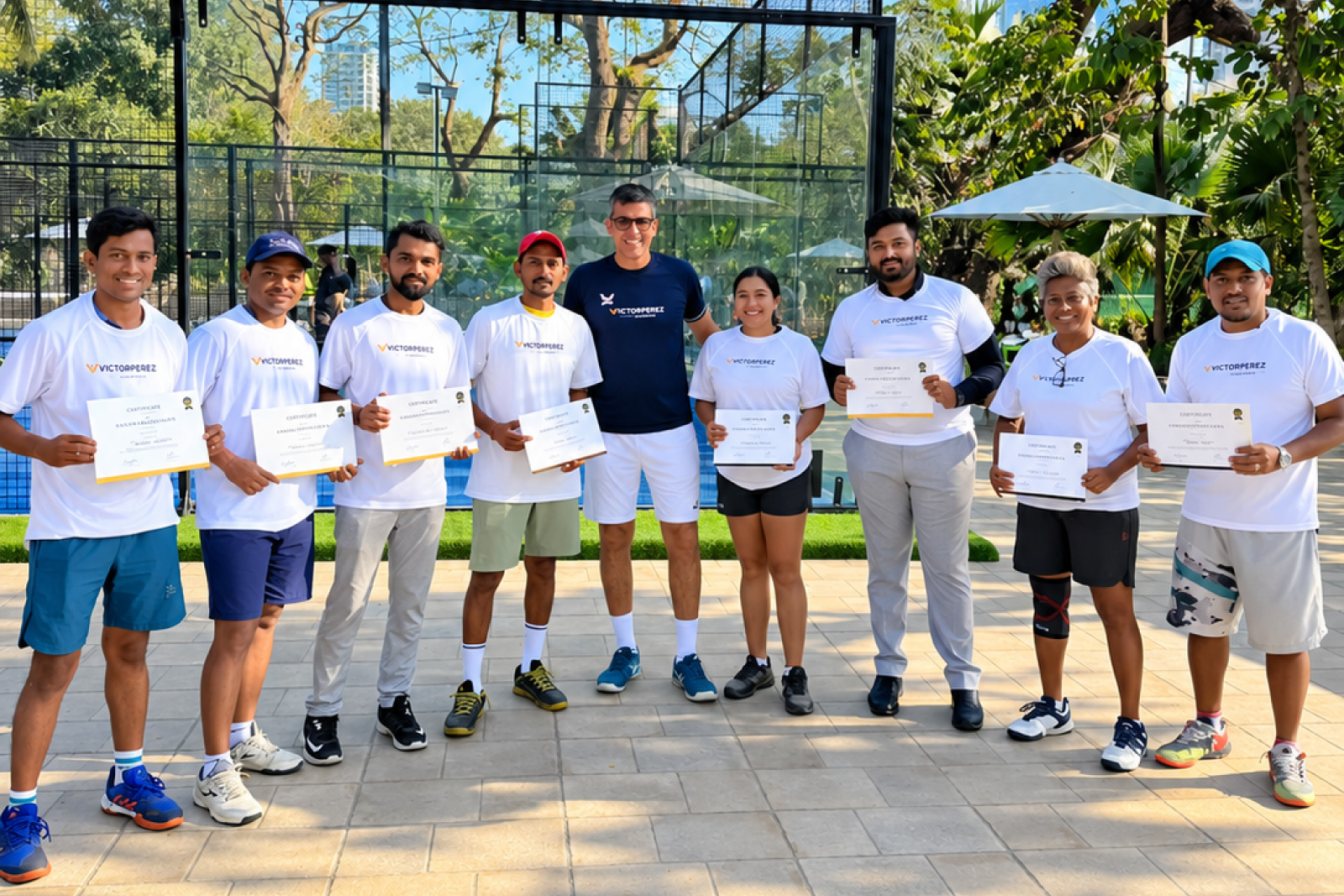
In that first trip we trained the first padel coaches in India under the Victor Perez Padel methodology, the same one behind my padel coach certification programme. I want to be clear about what that means, because “methodology” can sound like a word on a brochure.
It means we did not just show people drills. We taught them how to read a player, how to build a session, how to correct one thing at a time and how to explain why. A good padel coach is not the person who hits the best ball. It is the person who can make someone else hit a better one next week.
The biggest challenge was the walls. Almost everyone on that first course came from racket sports played without them, mainly tennis and badminton, so playing off the glass did not come naturally.
The second challenge was the method itself. The coaches came from a fairly old-fashioned coaching system, and I was asking them to teach in a more inclusive, more human way: keep the focus on the players, and make sure everybody enjoys the session and has fun while they learn. At first that was hard for them to grasp.
The first coaches in a country decide how everyone after them will learn the game.
Building a method that can travel
I did not stop after the first trip. I kept going back to India for the next two and a half years, and each visit had the same purpose: make the system stronger and make it less dependent on me.
Over that time I trained more than 100 coaches in India. We built the structure around them: how coaches are developed, how players move from beginner to competitor, and how a club or an academy can run its programme with a clear, repeatable standard. That is the core of what I now offer through the Victor Perez Padel Academy in York and internationally.
I also worked with the people running the academy side, including sessions with its leadership, because a coaching method only survives if the business around it understands why it matters.
The world number ones come to India
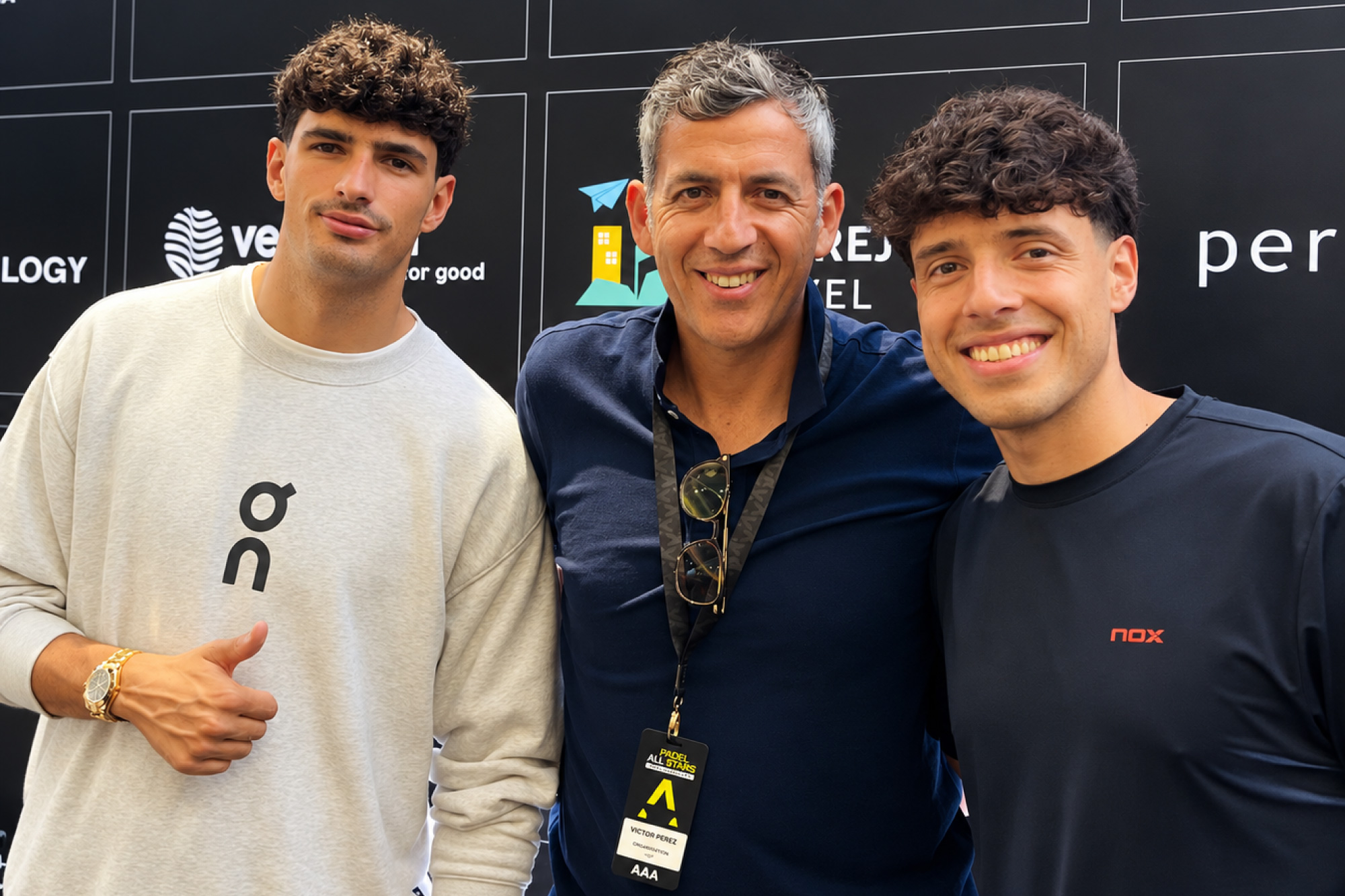
The last chapter of my work there was the one I am proudest of. On 29 August 2026, at the Dome SVP Stadium in Mumbai, Arturo Coello and Agustín Tapia, the two world number ones, played an exhibition in front of the Indian public. They were joined by Alfonso Sánchez, Antón Sanz and Indian players chosen through national qualifiers. Padel Park India organised it, and I was part of the team that brought the world number ones to India. Actu Padel reported that more than 4,000 spectators were expected, and that it came one month before padel made its debut as a medal sport at the Asian Games. On the day the stadium was full, with VIP guests and the very best of Indian society in the seats. It was an event I will remember for a long time, and Padel Park organised it superbly.
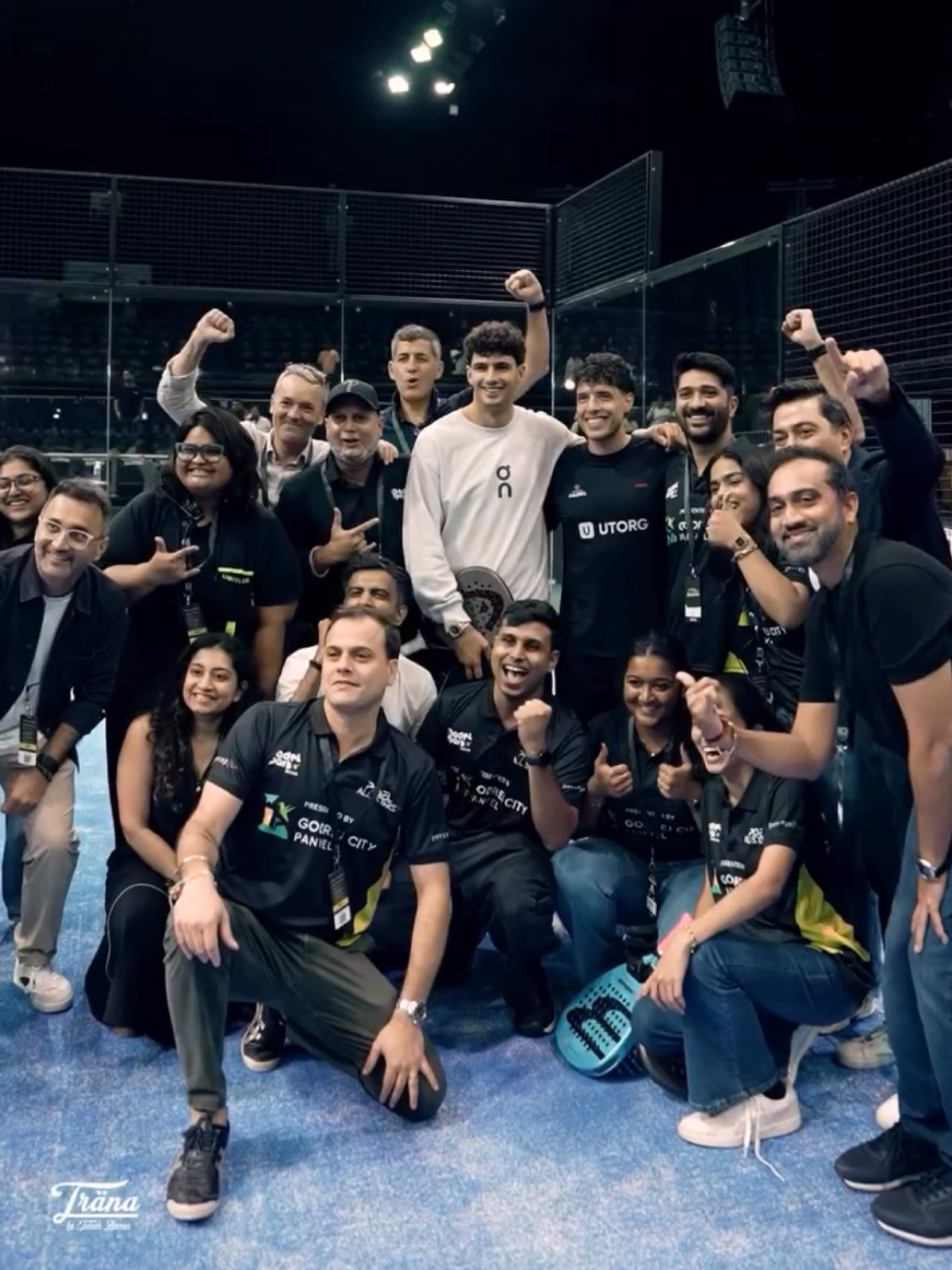
It closed a circle for me. In February 2024 we were training the very first coaches. In August 2026 the best players in the world were on a court in India, and a new generation of Indian players and coaches was watching from the stands.
My work there has now come to an end, and I leave with a lot of gratitude. In September 2024, India played its first international team tournament in Bali, and the team came home with the bronze medal under my direction. That is a story for its own article.